
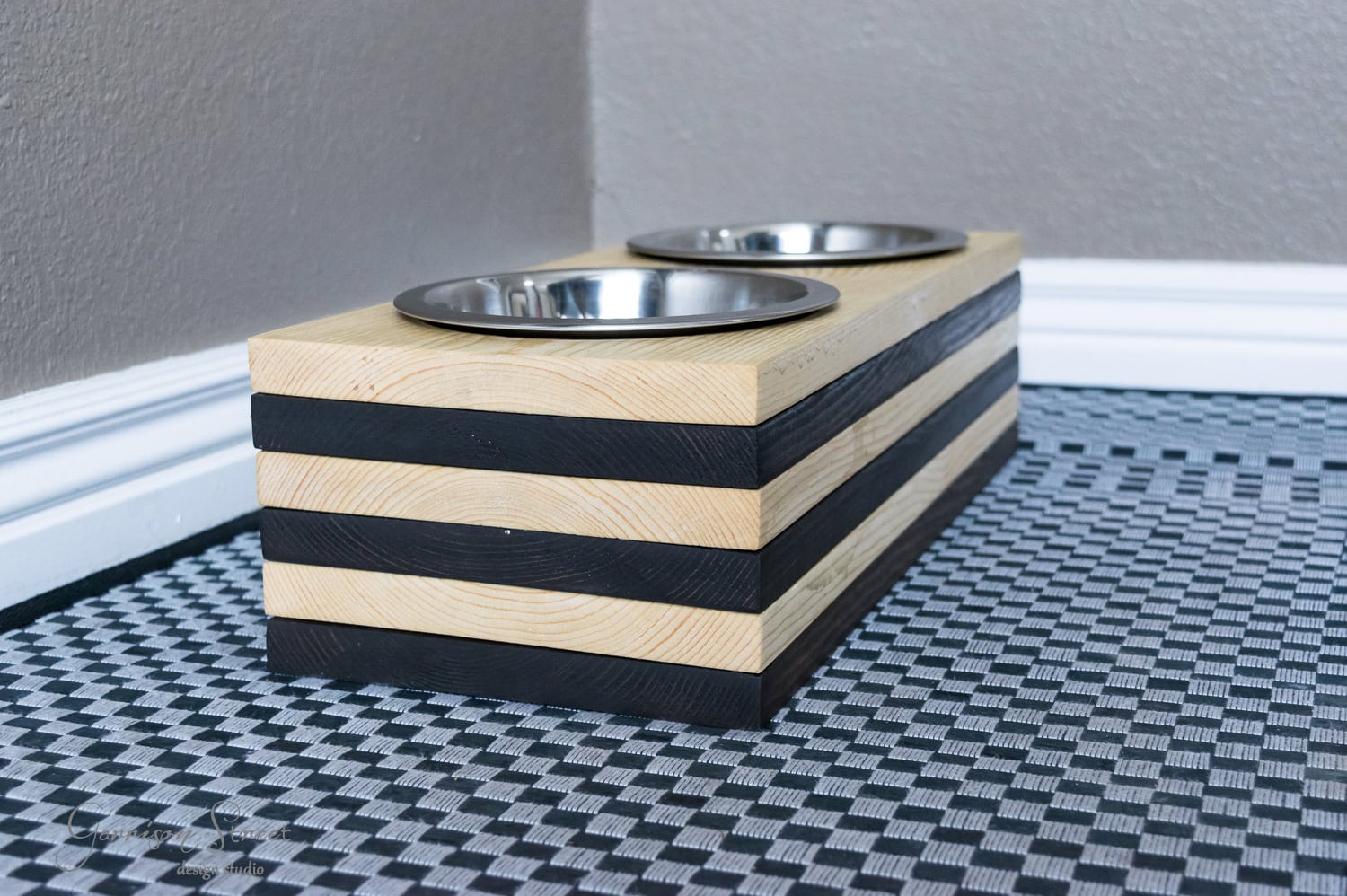
DIY Modern Raised Dog Bowls for Food and Water
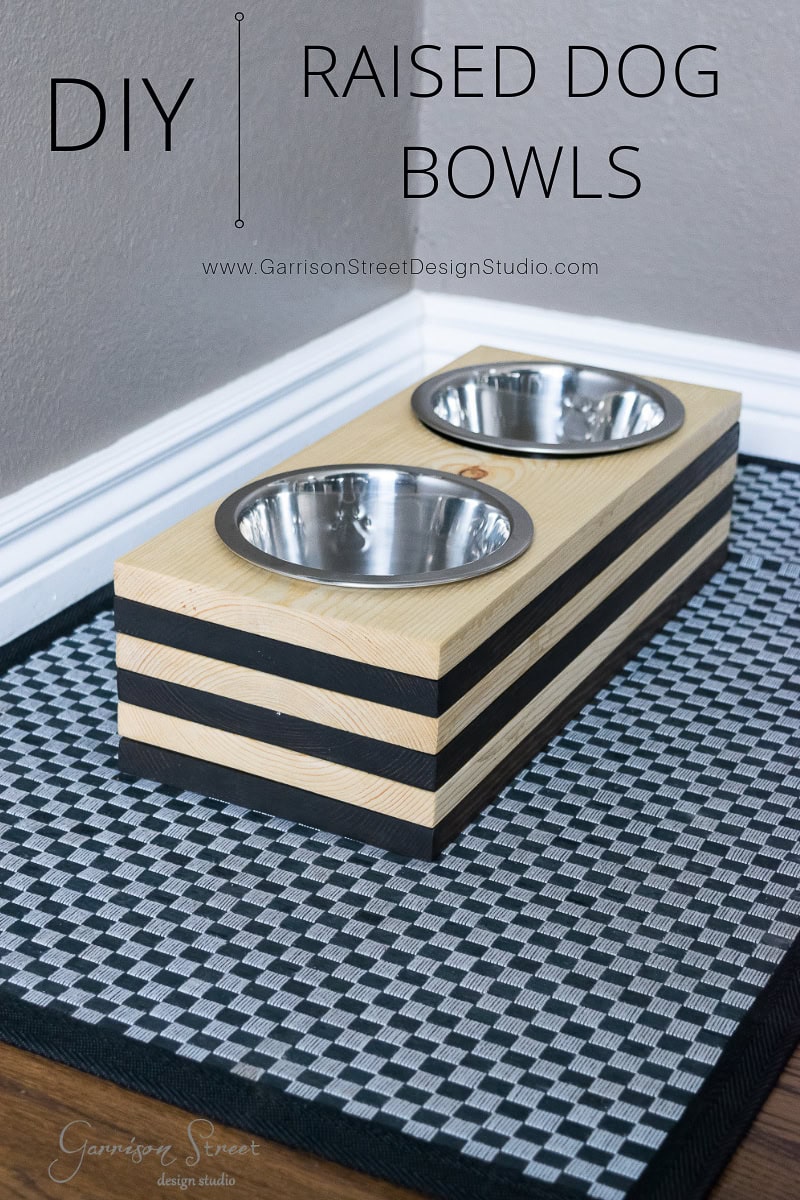
Calling all dog owners! Today I am expanding my DIY projects for one of my favorite things. My dog Marvin! I have created a raised bowl dog feeding station for him and it is so cute, I know you will want to make one too. This DIY dog bowl stand is perfect for small dogs, large dogs, or even older dogs. Let me show you how to make an elevated dog bowl stand for your furry friend!
This post contains affiliate links. For more information, please see my policies.
- Cost: $4 (bowls only, other materials on hand)
- Dry Time: About 12 hours
First, let me start off by giving credit where credit is due. I wanted to make Marvin a raised dog bowl from day one because I am a DIY addict and that’s what I do. But my original plan just wasn’t going to be the right height for our small but tall Italian Greyhound mix. After tossing several ideas around, Barry actually came up with this one. So kudos to my hubby for having a great idea and me not vetoing it 😉 I was also able to take advantage of some scrap wood we already had on hand that was just collecting dust in the garage. So let me show you how I did it.
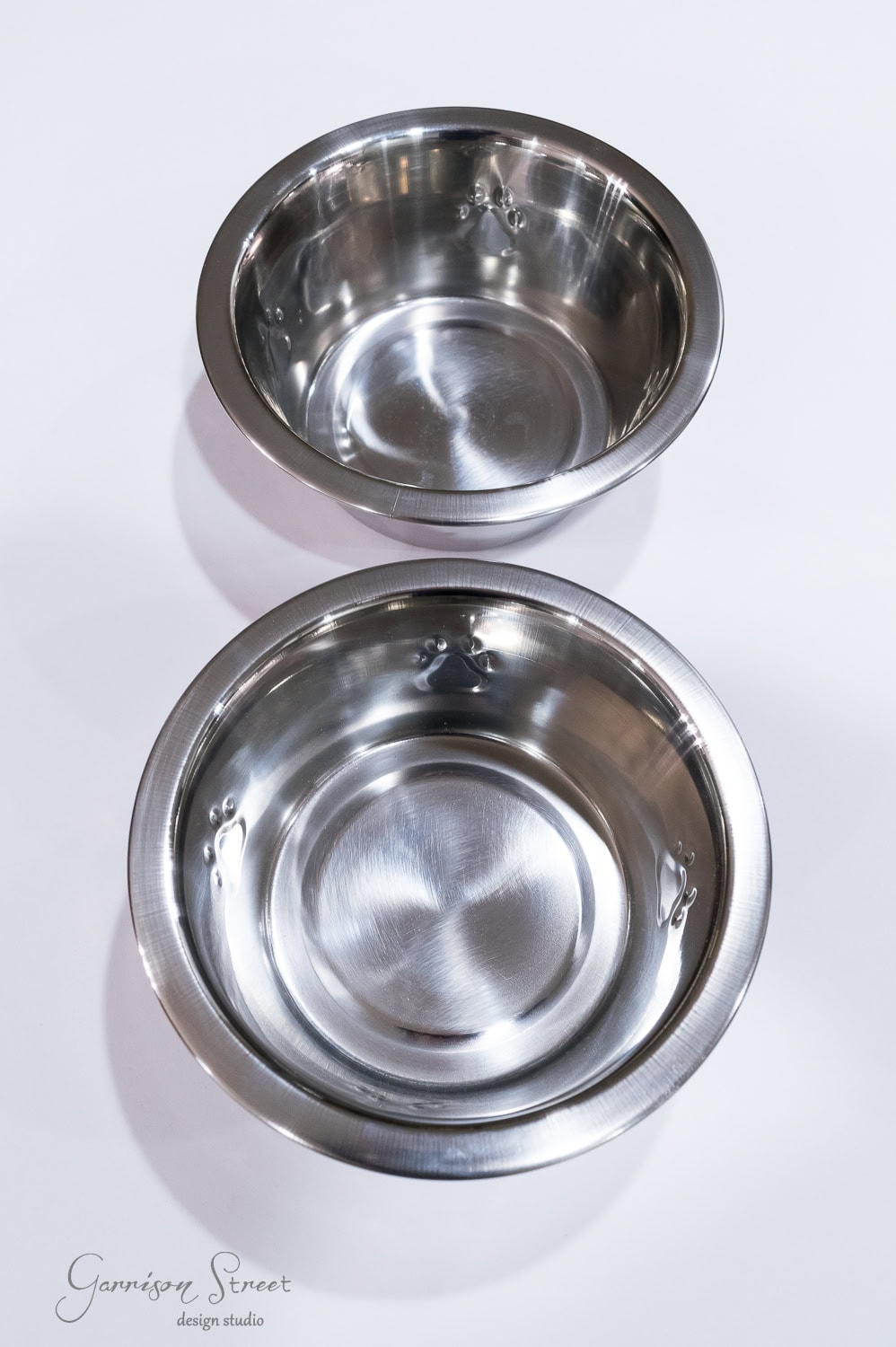
Step 1: Find Appropriate Sized Dog Bowls with a Lip
For the first step you will need food bowls and water bowls for this raised dog feeder. You don’t need new dog bowls, you can use bowls you already have but they really need a lip on them. I purchased two metal bowls with little paw prints around them at my local Walmart. They were less than $2 in store and the half inch lip was perfect! They don’t appear to sell the exact bowls online, but these metal dog bowls are similar.
Step 2: Cut Wood to Length
I used some scrap wood common boards we had on hand from a different project. Using the bowls as a guide, I decided on 17 inches in length.
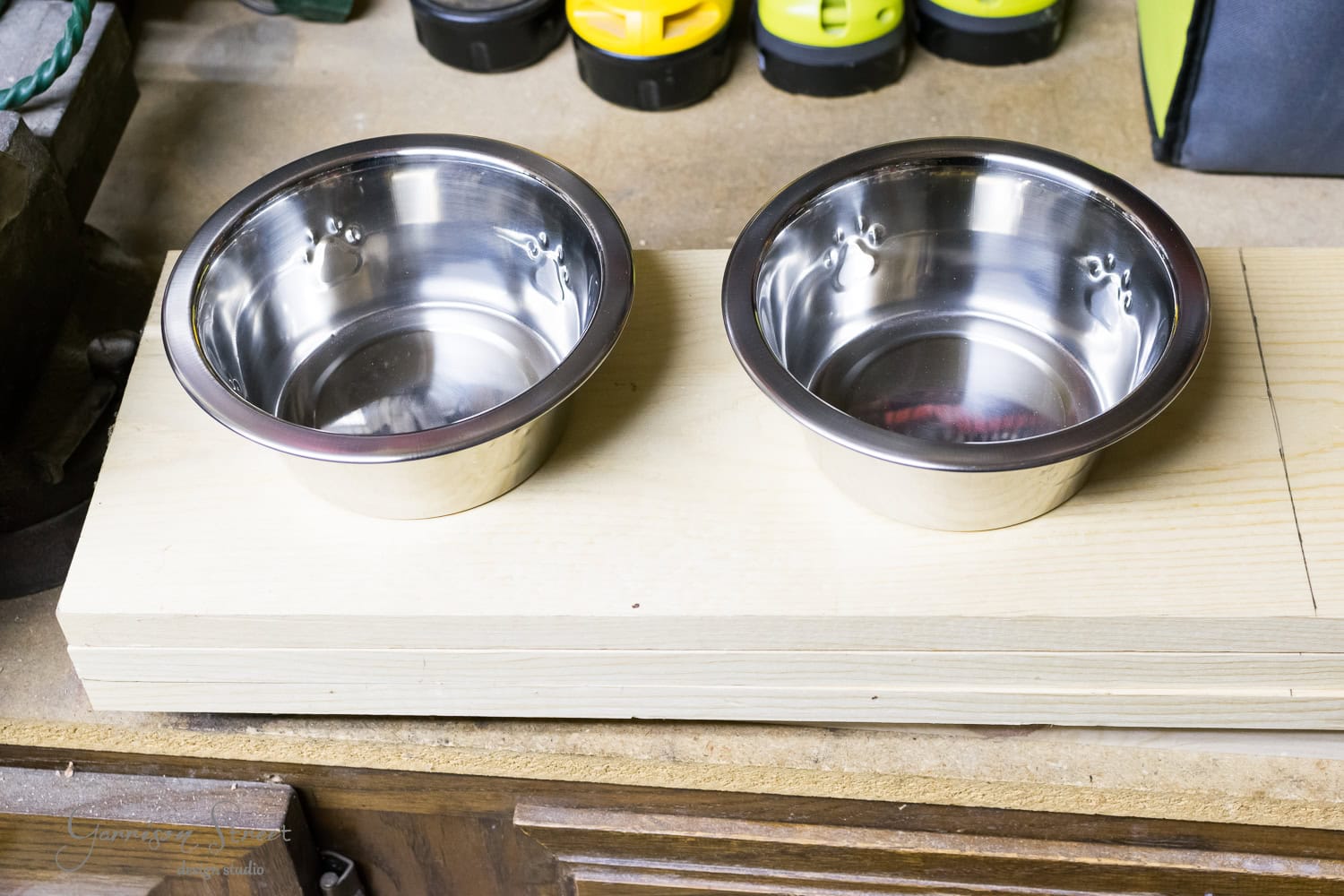
Then I measured 17 inches on all my boards and cut them to length with our miter saw but you could also use a circular saw and speed square.
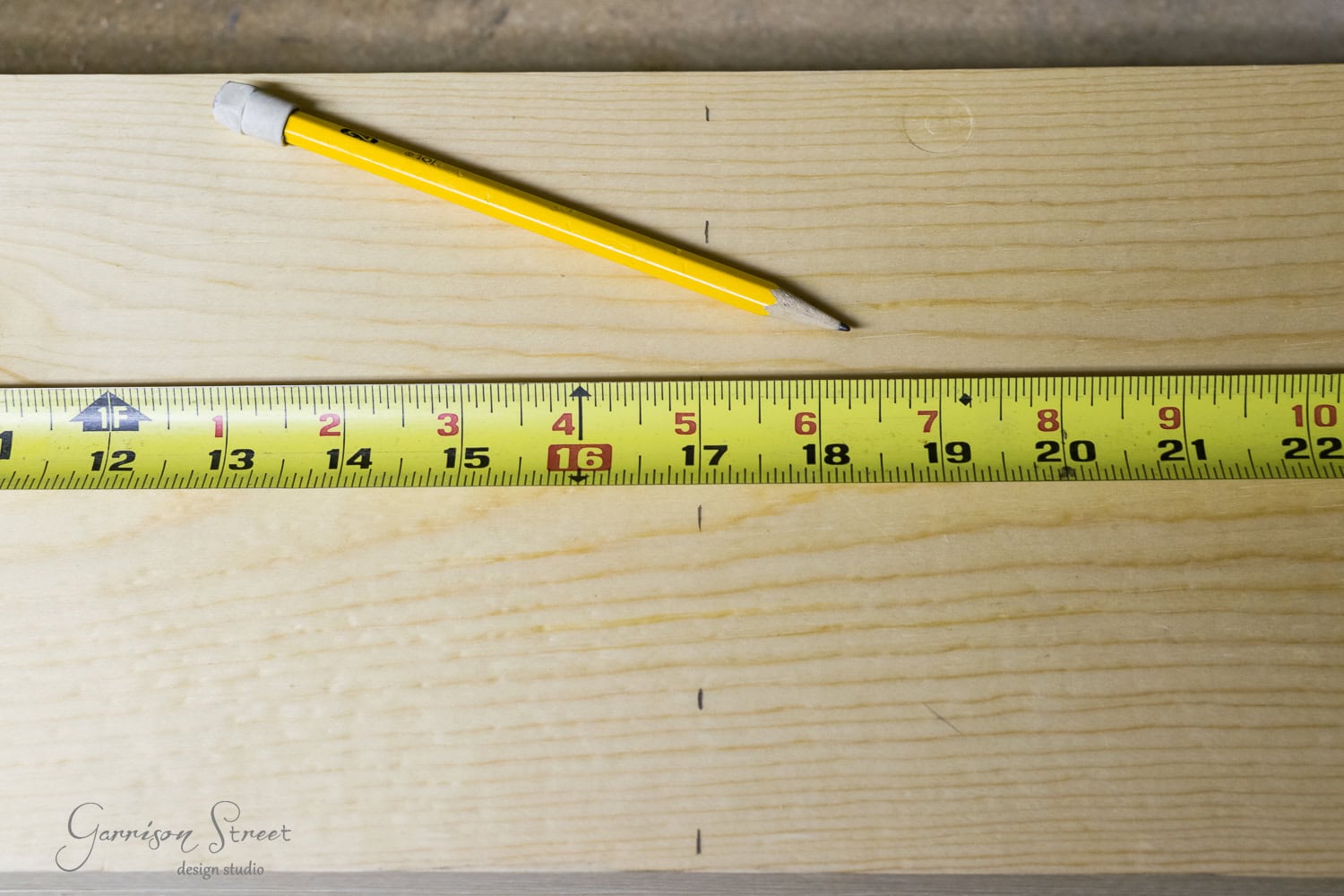
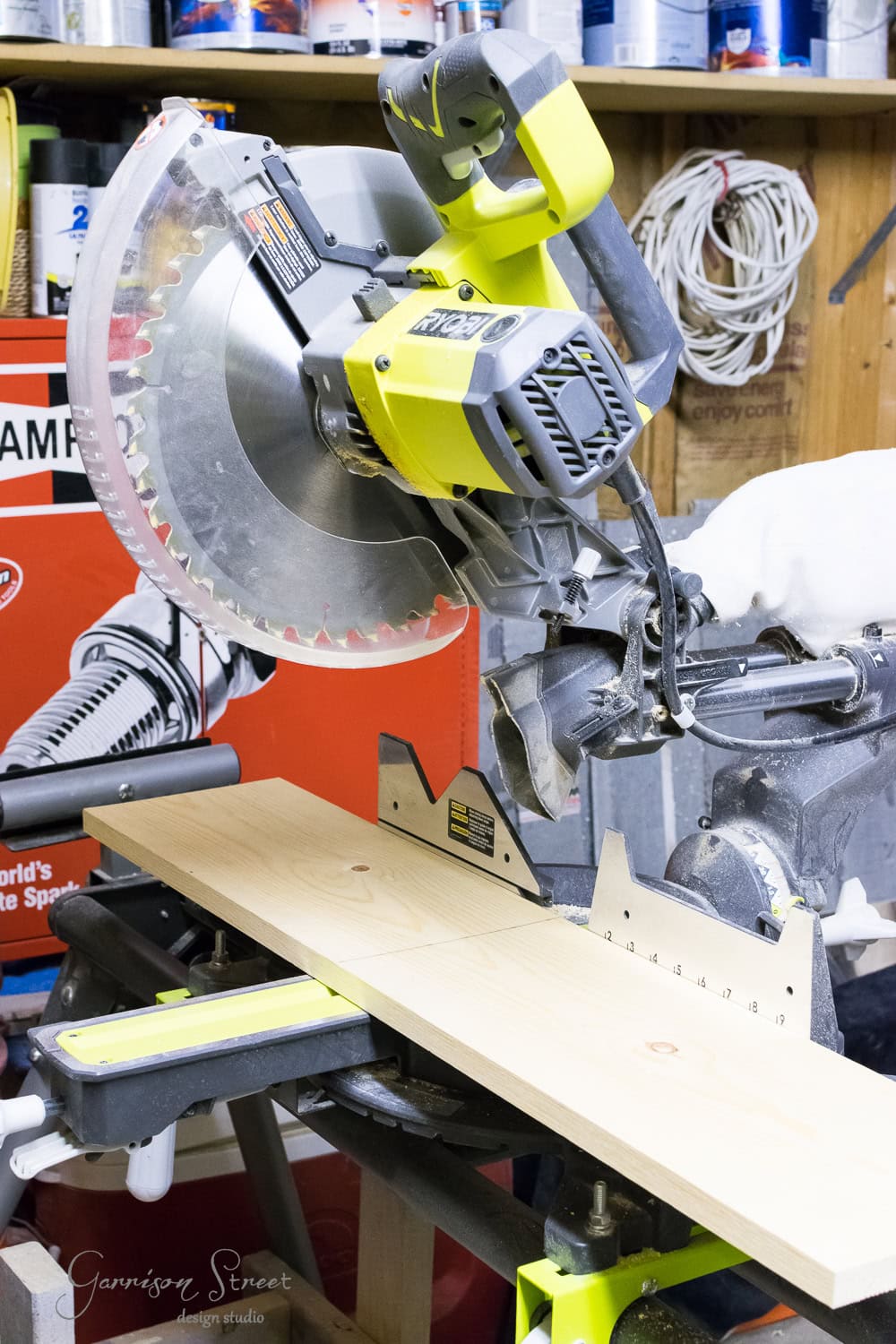
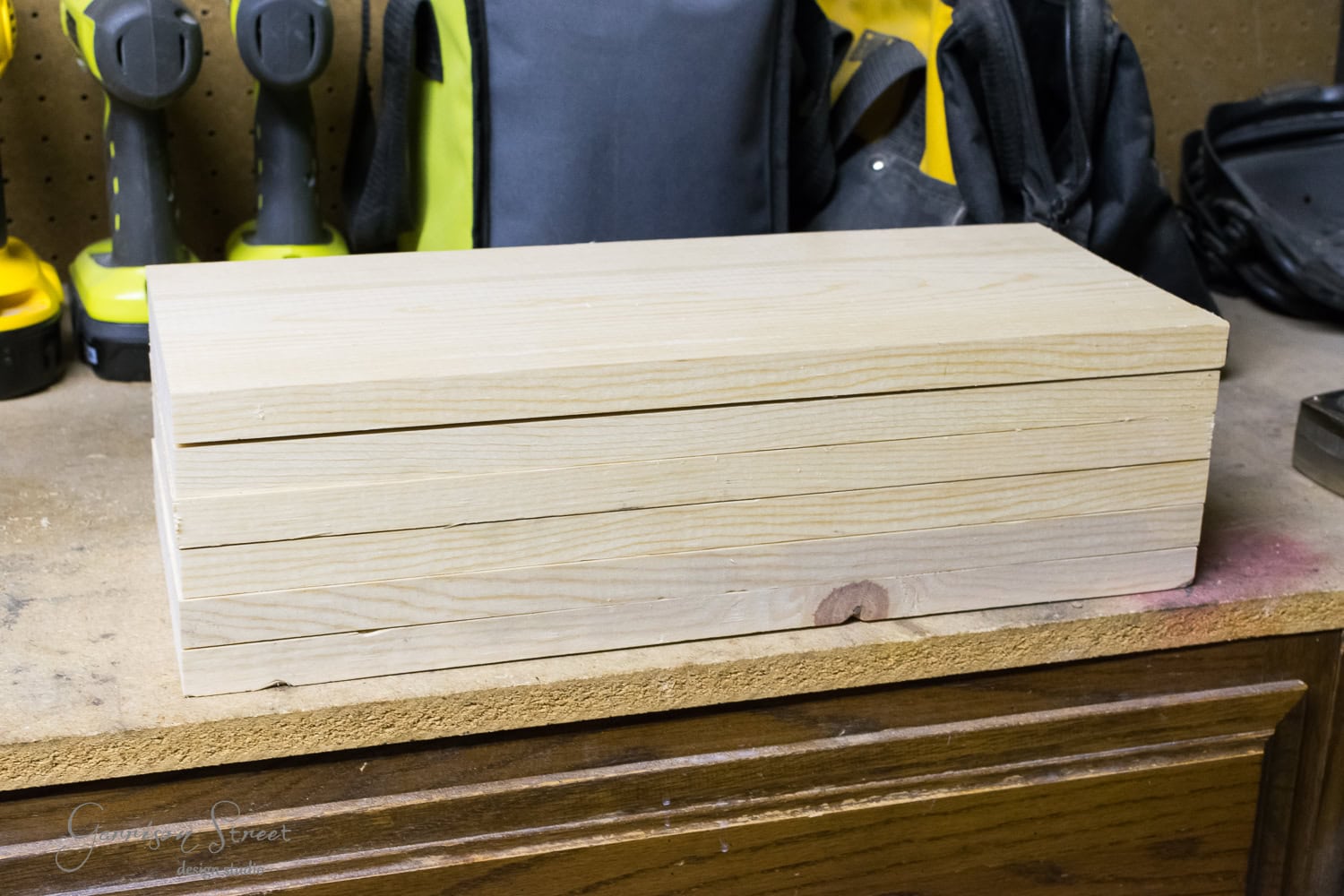
Based on the thickness of each board at 3/4 inch, I chose to stack 6 boards for an overall height of 4.5 inches. The height of your dog’s bowl will depend on the dog’s size. Marvin is a small dog but he is pretty tall. For larger dogs, you could make it the same way I did an add hairpin legs to the bottom layer to make it even taller.
Step 3: Determine Your Hole Size
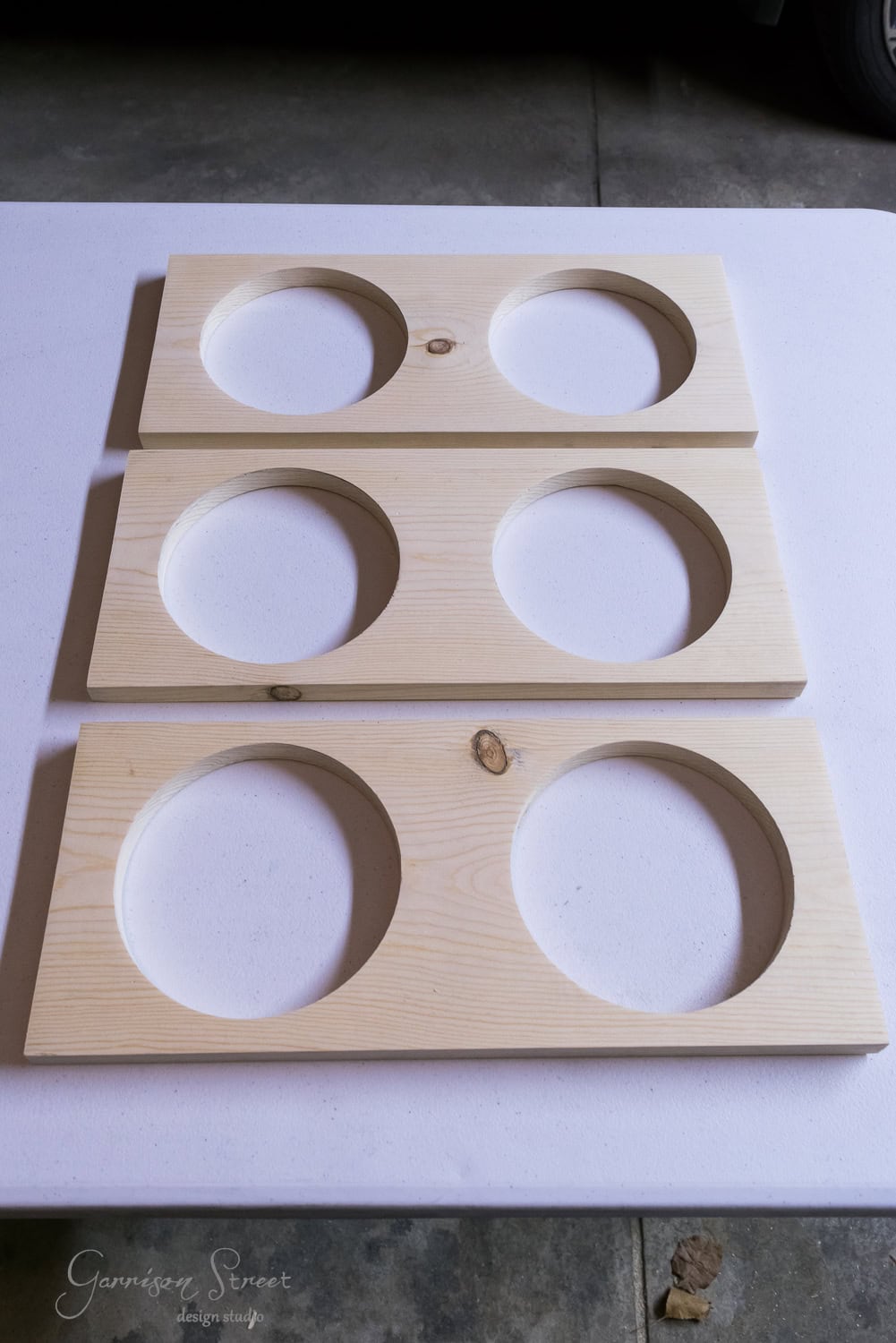
The bowls I used are just a hair over 6.5 inches in diameter. I marked a 6 inch circle and the center point of each circle. NOTE: the holes you cut NEED TO BE SMALLER than the lip of the bowl. You will also need to cut holes in enough boards to fully recess the bowls. Based on the size of our bowls, we needed to cut 6 holes in total, (2 holes in the top three pieces of wood).
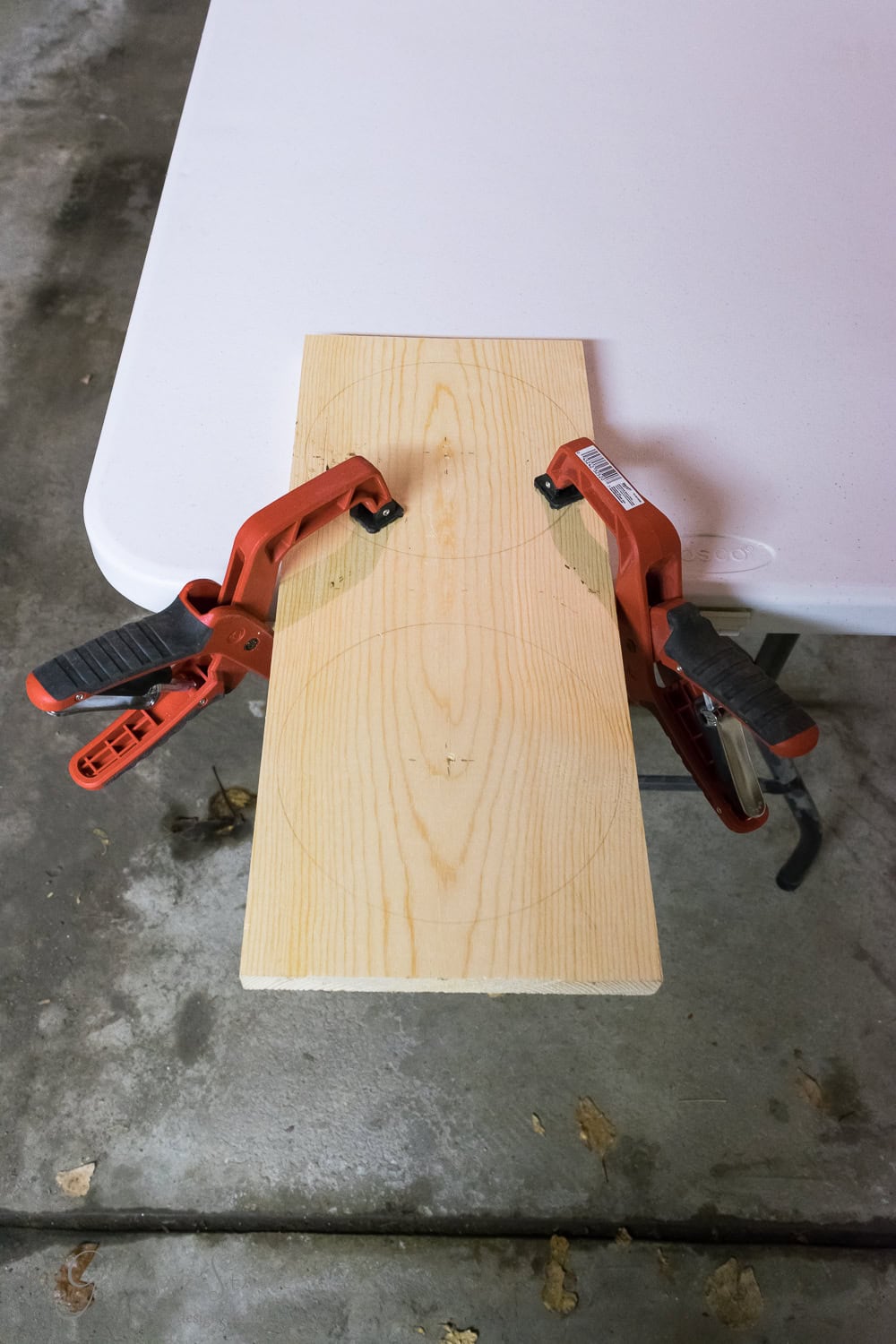
With the bowl holes marked, I clamped the wood to a table to help keep it steady for drilling. I will be honest, wood clamps would have been a much better option for this, but these are the clamps we have.
Step 4: Drill or Cut Your Holes Out
For this step we used a 6 inch hole saw. Barry actually cut these out because it definitely takes some muscle and we don’t have the most powerful drills. You could also use a jigsaw which might actually be easier with a jigsaw blade meant for circles. Note, the don’t need to be a perfect circle since the lip of the bowl will cover some of it.
Step 5: Sand All the Wood Pieces Smooth
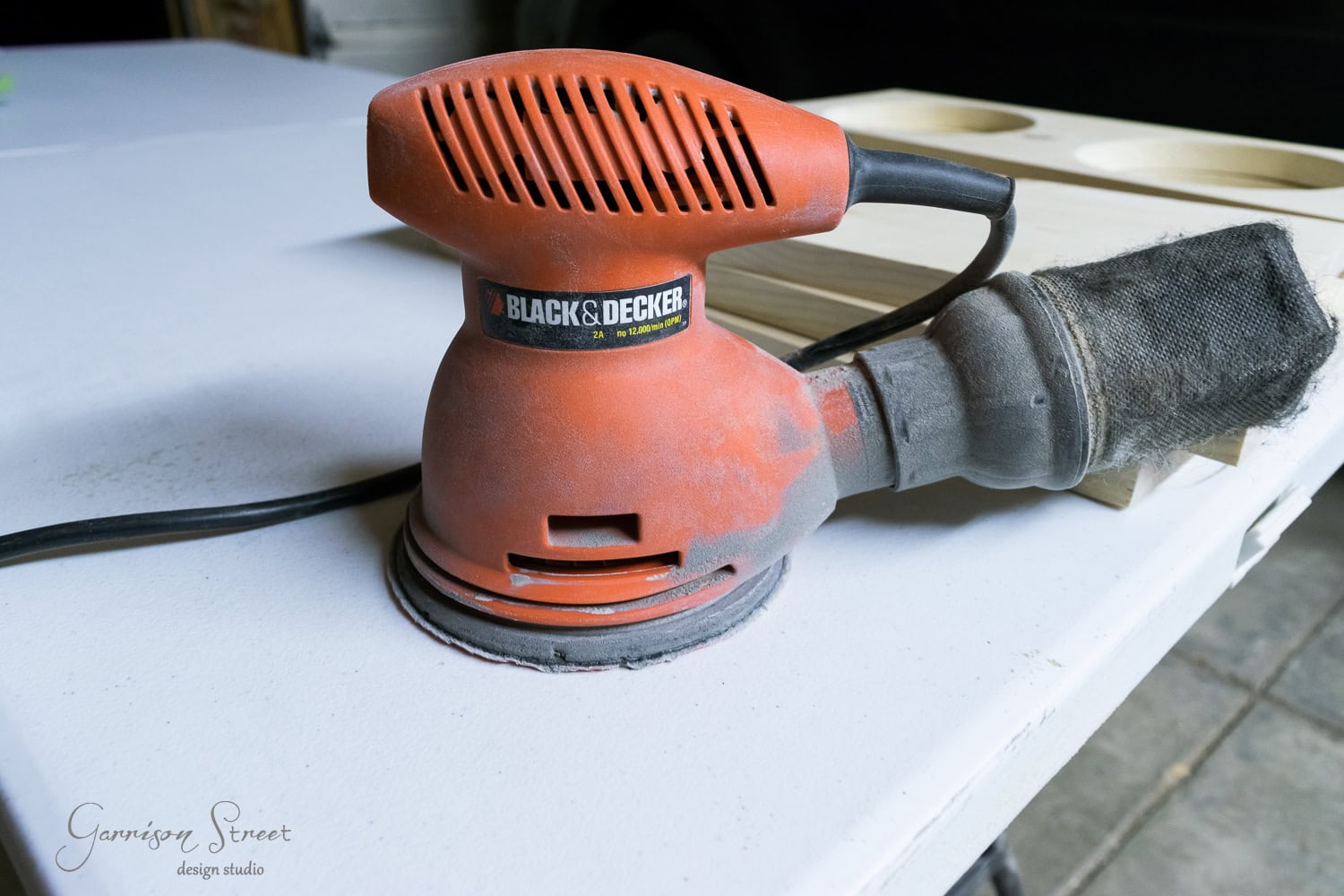
I sanded each piece with our orbital sander.
I hand sanded the inside of the circles with sand paper.
Step 6: Stain/Seal the Wood
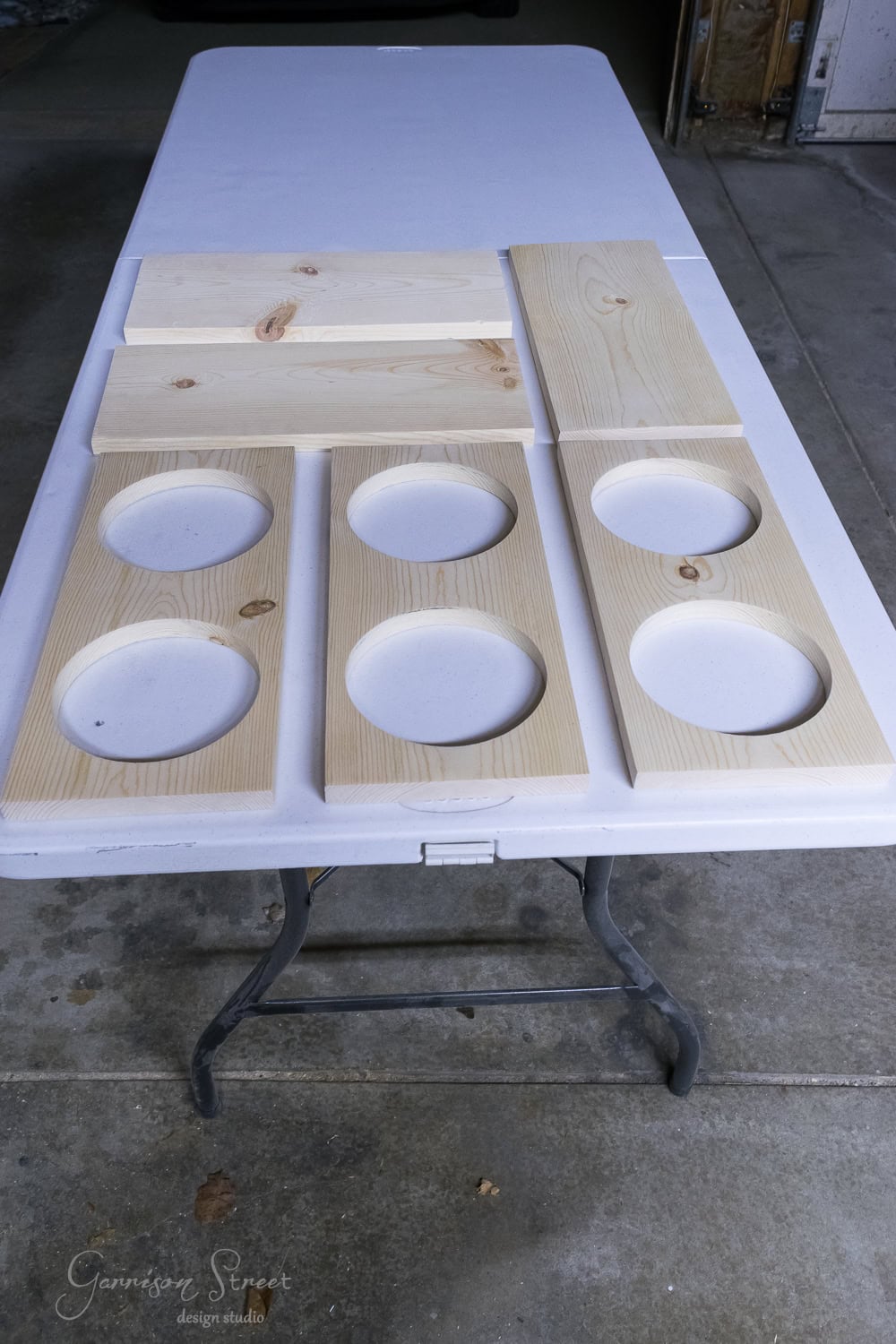
I wanted to create a butcher block type look so I alternated the color on each piece. For the natural layer I used a food safe butcher block oil only. I HIGHLY recommend the top board, where your dog will be eating to be natural wood with only food safe oil for the safety of your pet. For the darker layers, I used a Kona stain I have had for years. I don’t think they make this exact stain anymore, but this dark Kona stain is very similar.
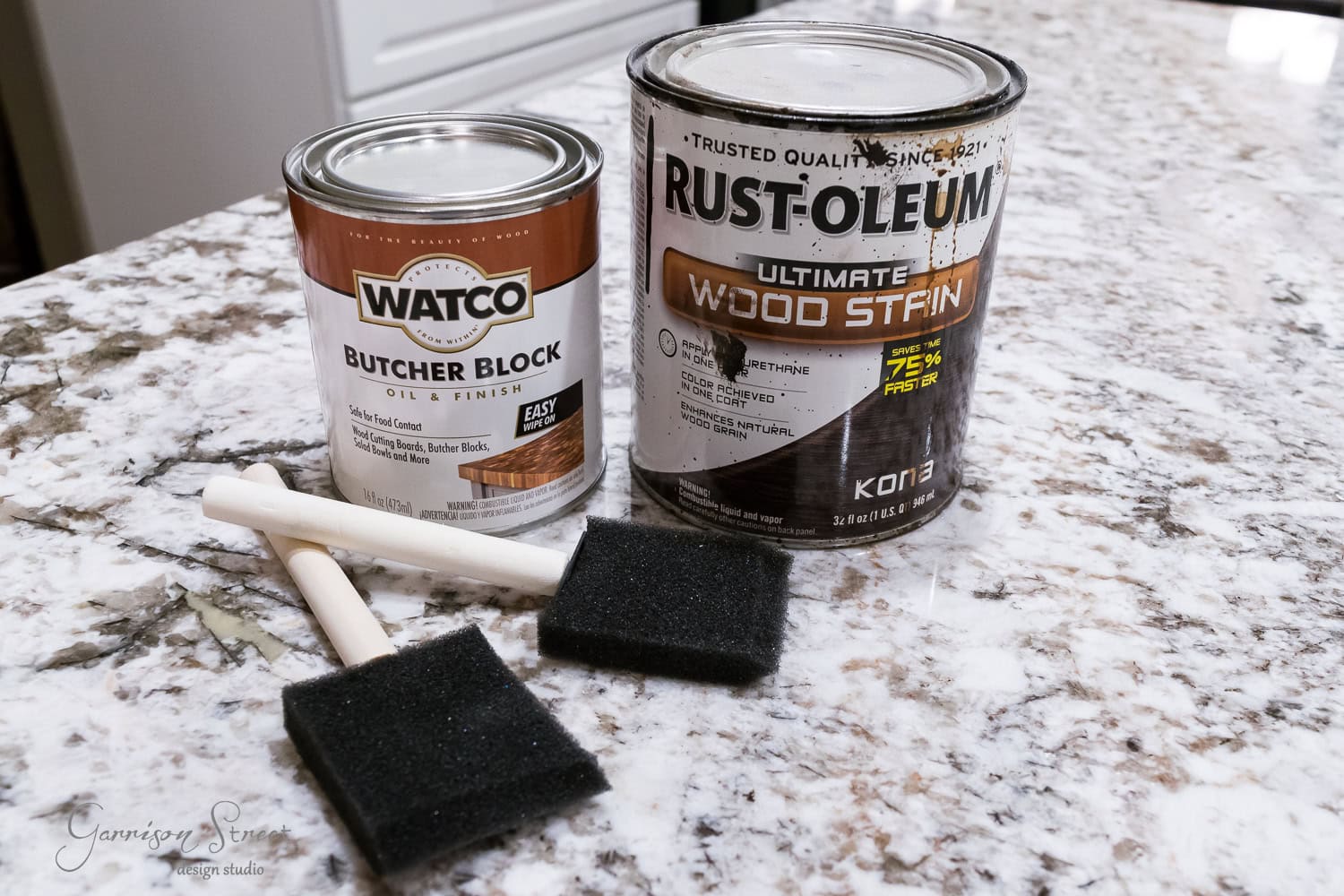
Because most stains are oil based and I hate using mineral spirits, I started using a foam brush so I can just throw them away when I am done. It’s so much easier than trying to clean my favorite angle paint brush.
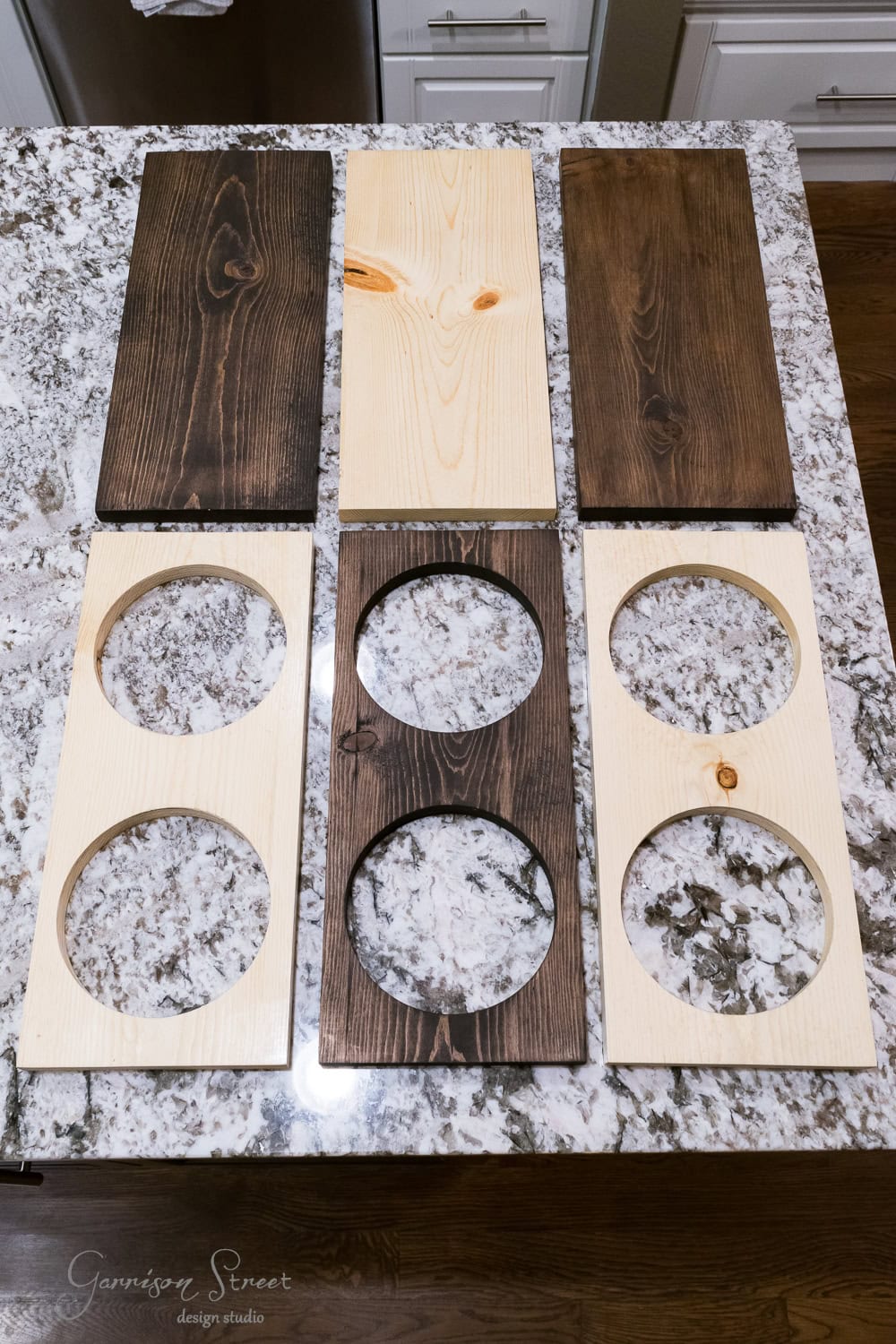
Step 7: Glue Each Layer Together
I used landscape adhesive we had on hand because a) I already had it and b) we used it on our faux fireplace logs and it worked like a charm. If you don’t have any on hand, Gorilla construction adhesive or a generous amount of wood glue would be my next suggestion. When you get to the layers with the holes, make sure you apply the glue to the backside of the piece with the holes cut out so you do not apply glue where your bowls will sit.
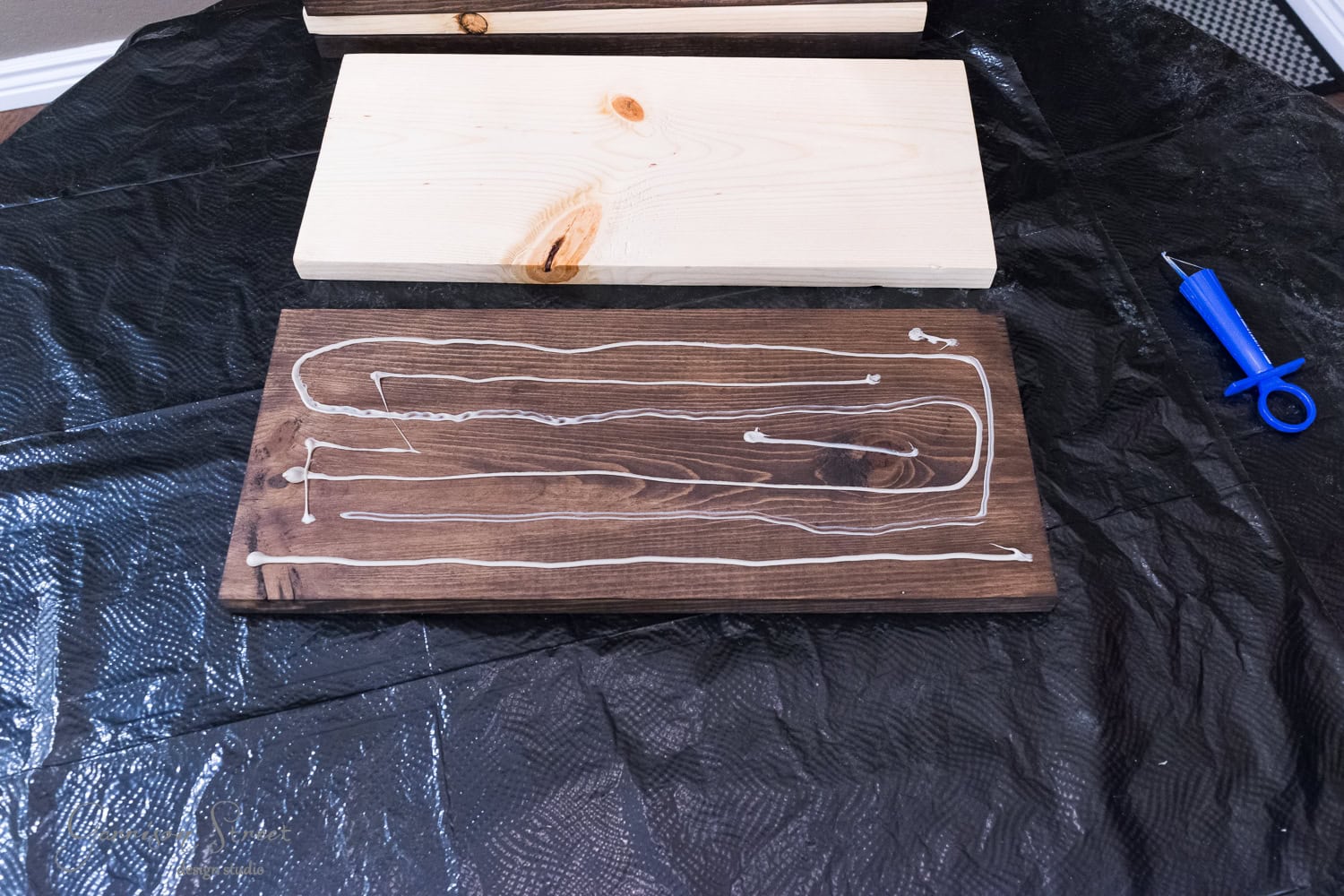
Marvin watched this part from his favorite window seat 🙂
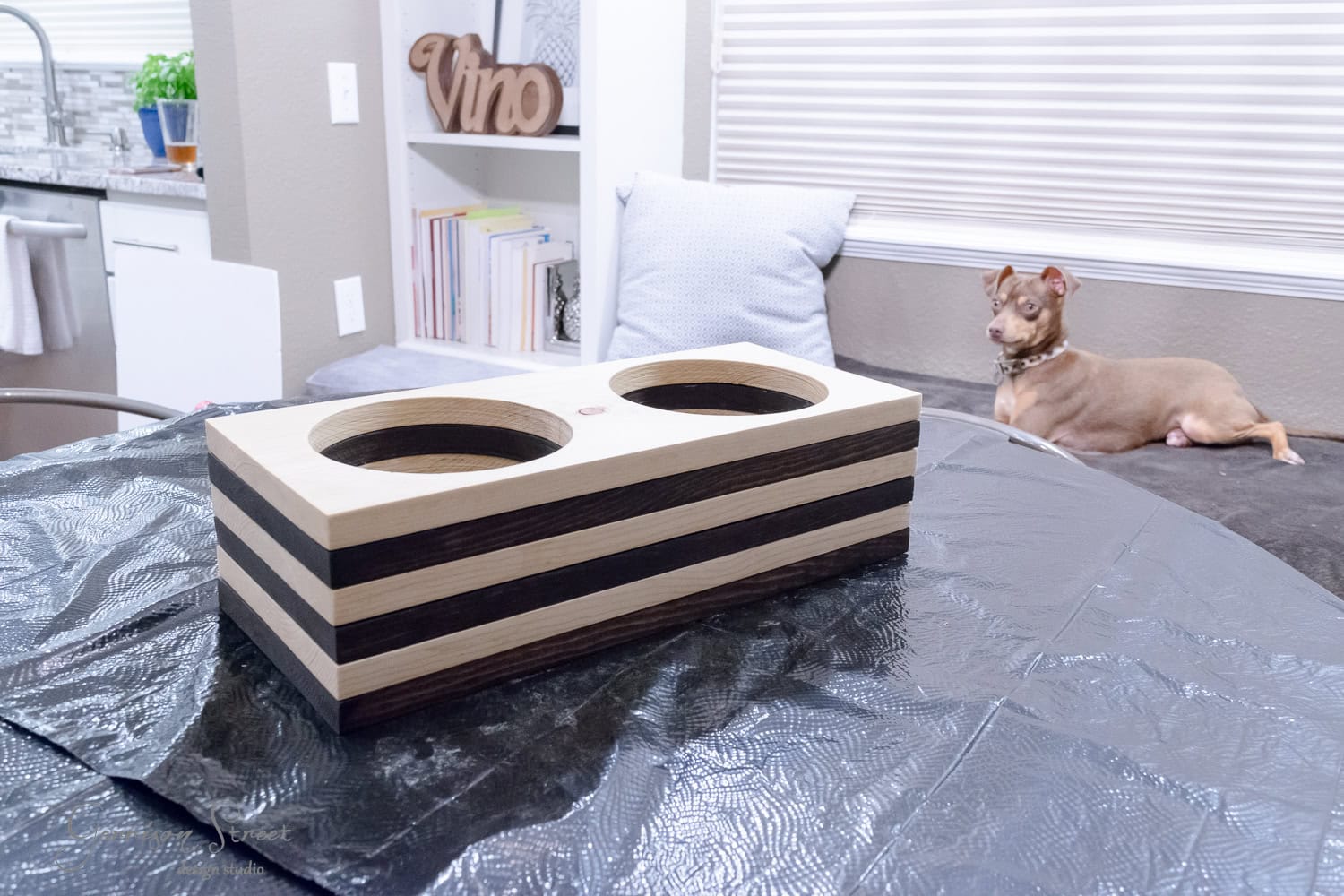
Step 8: Add Weight and Allow to Dry Overnight
It would be very handy to have wood clamps for this step, but we don’t so we got creative. We laid a scrap piece of wood across the top layer to protect the wood and provide a flat surface. Then we stacked a few weights on top, 27 lbs to be exact. See, I told you we got creative 😉 I allowed it to dry overnight or about 12 hours.
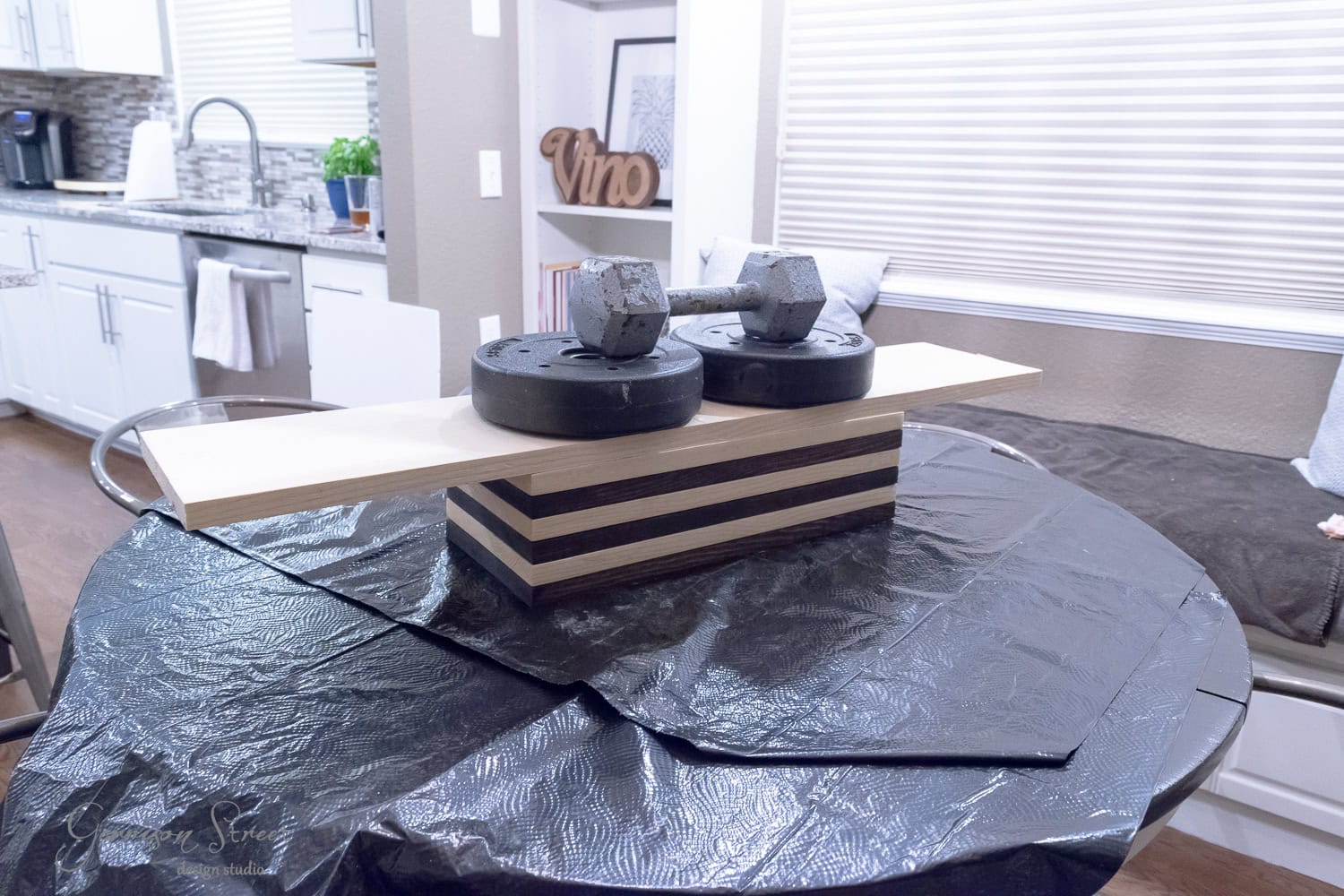
Step 9: Add Bowls
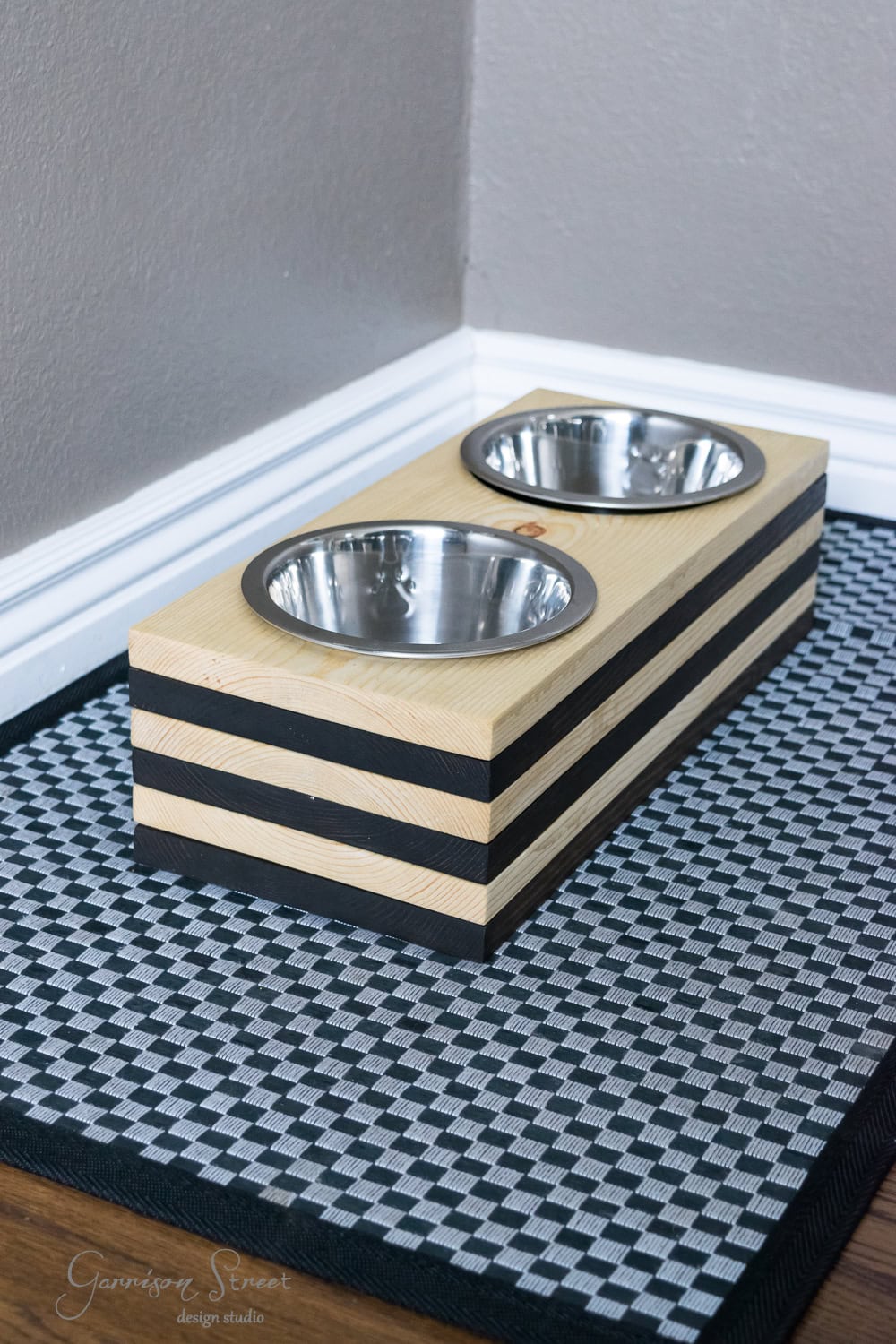
Add your dog bowls and let your pup check out their new feeding station.
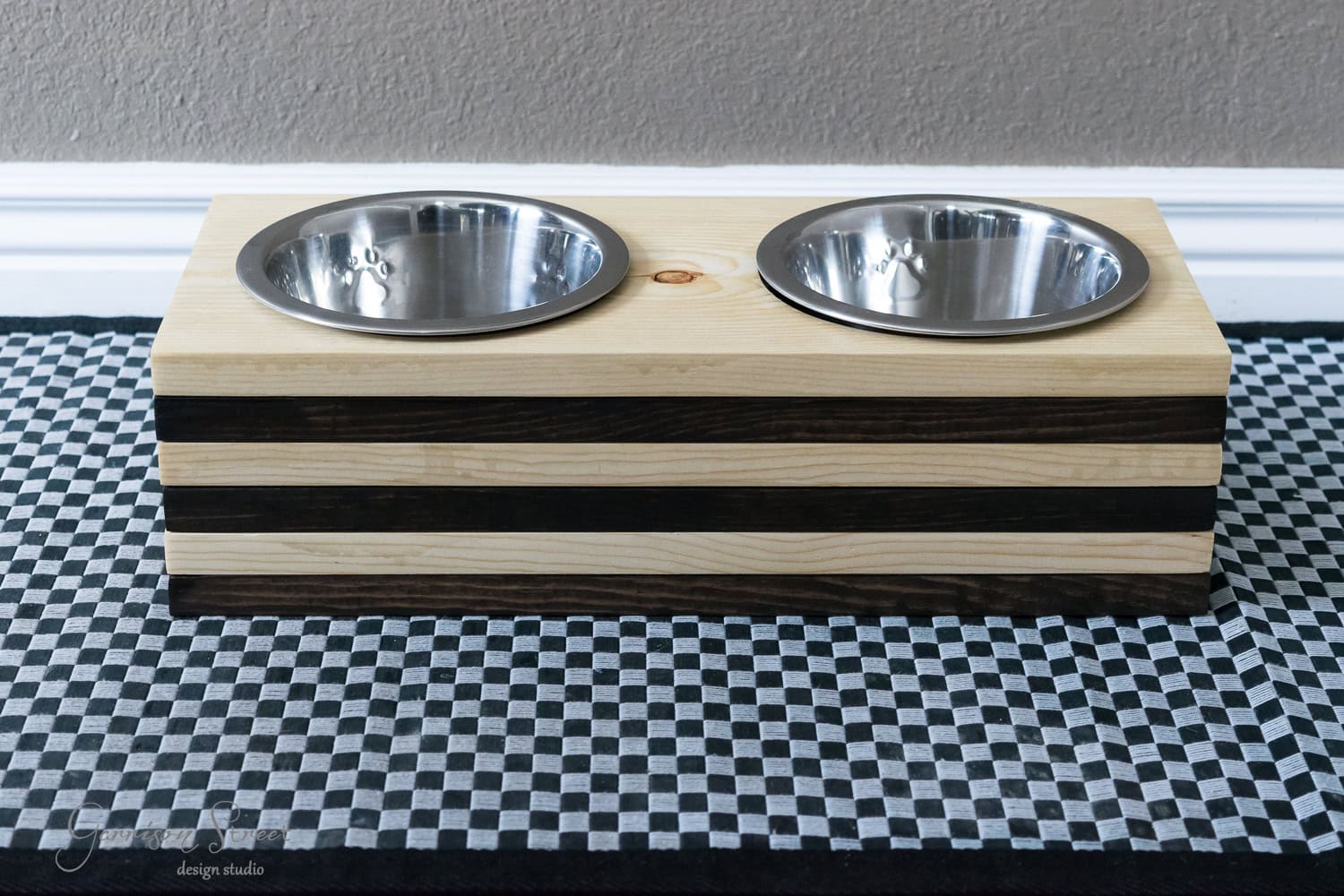
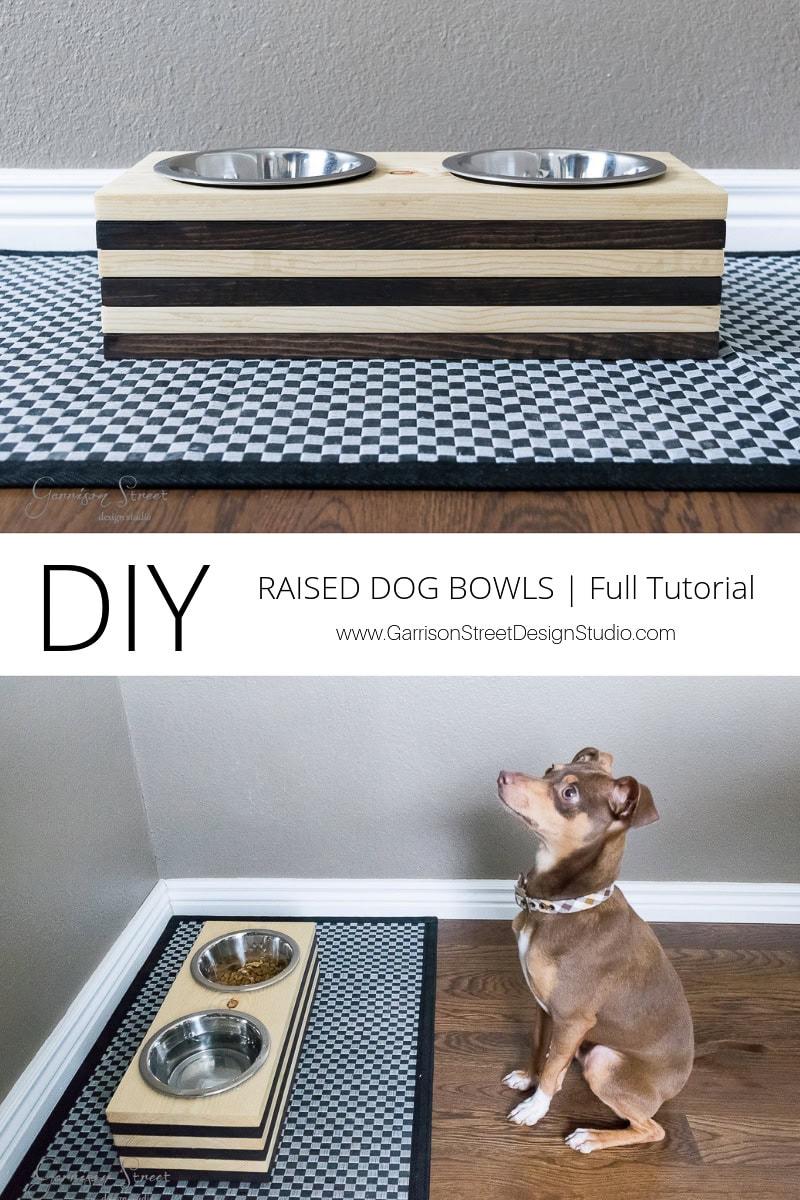
And this is what they look like from the side. I love the alternating wood grain!
Step 10: Watch Your Pet Enjoy!
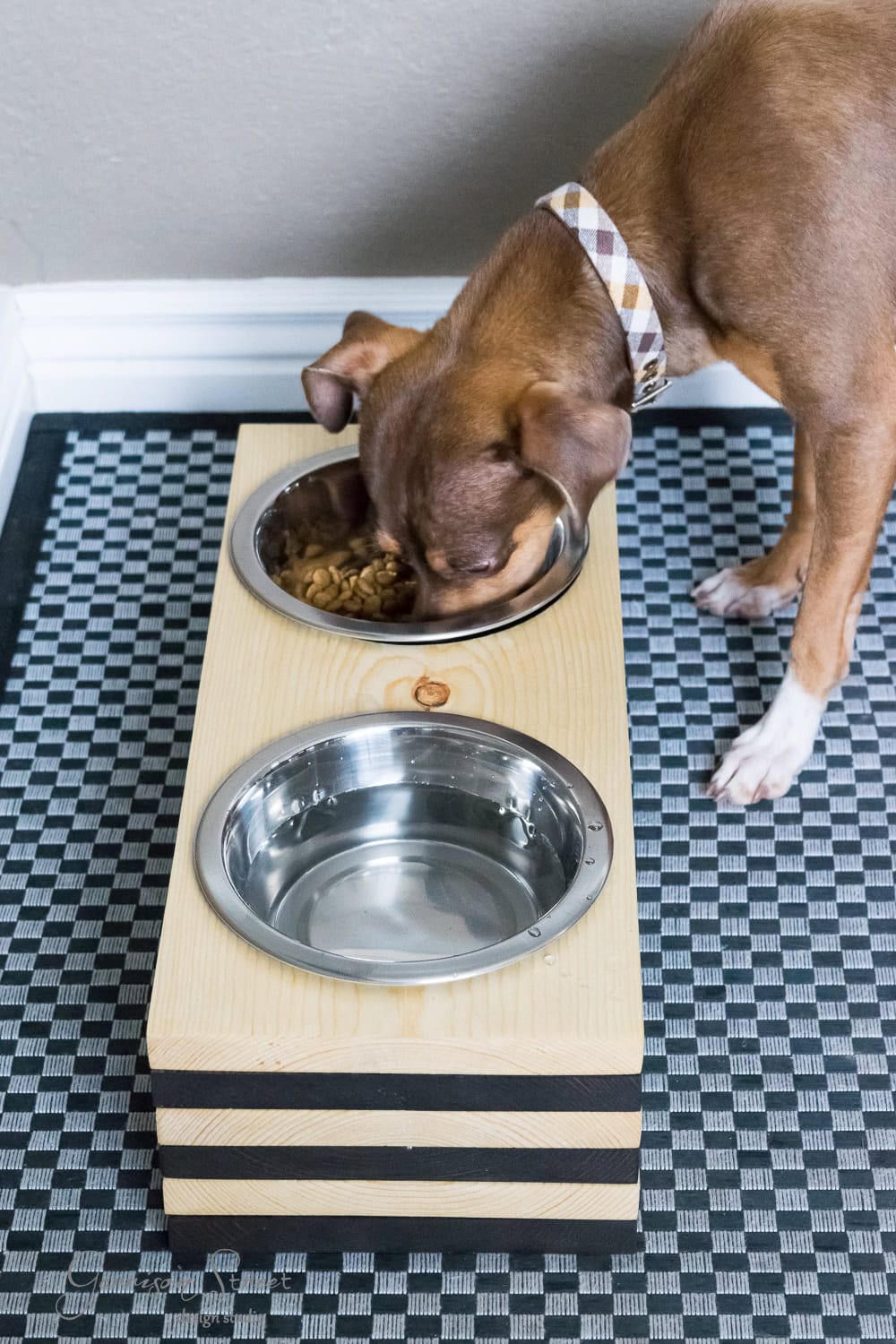
Add your dog’s food and let them know this it theirs. I was a little nervous Marvin wouldn’t like the metal bowls because some dogs don’t, but he had no problem!
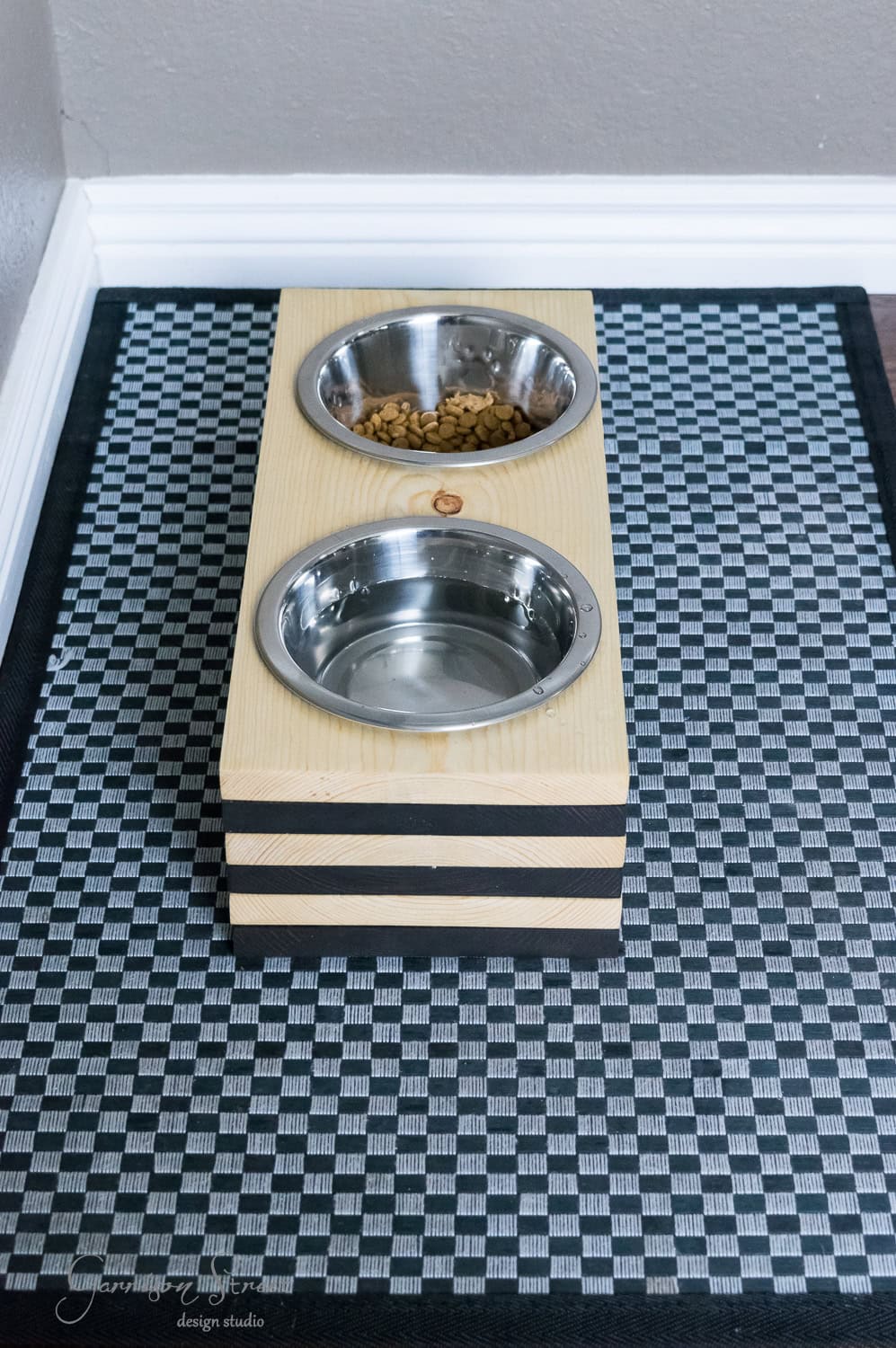
He knew it was for him and started eating from it right away!
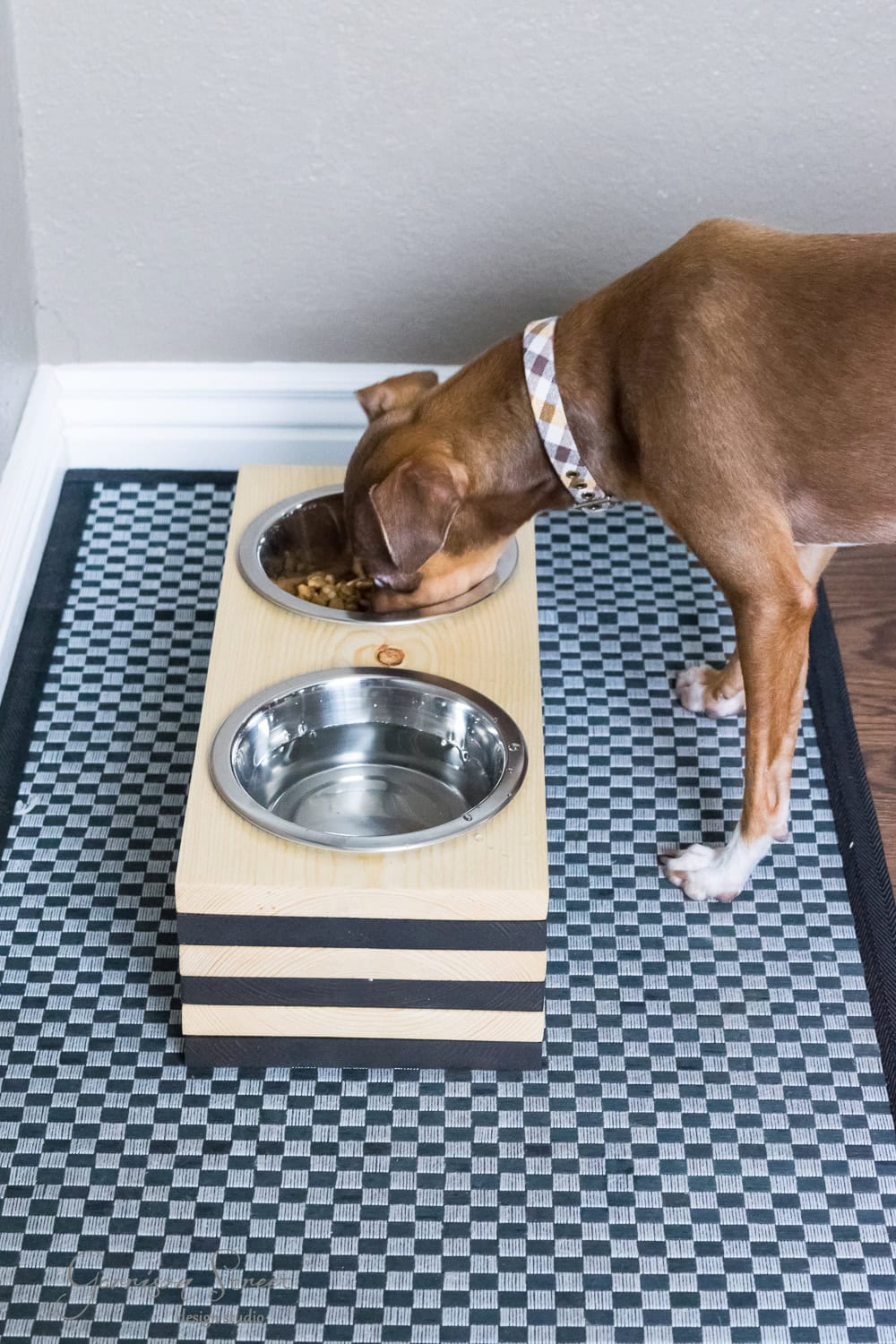
It’s the perfect size for Marvin and it looks cute on the kitchen floor.
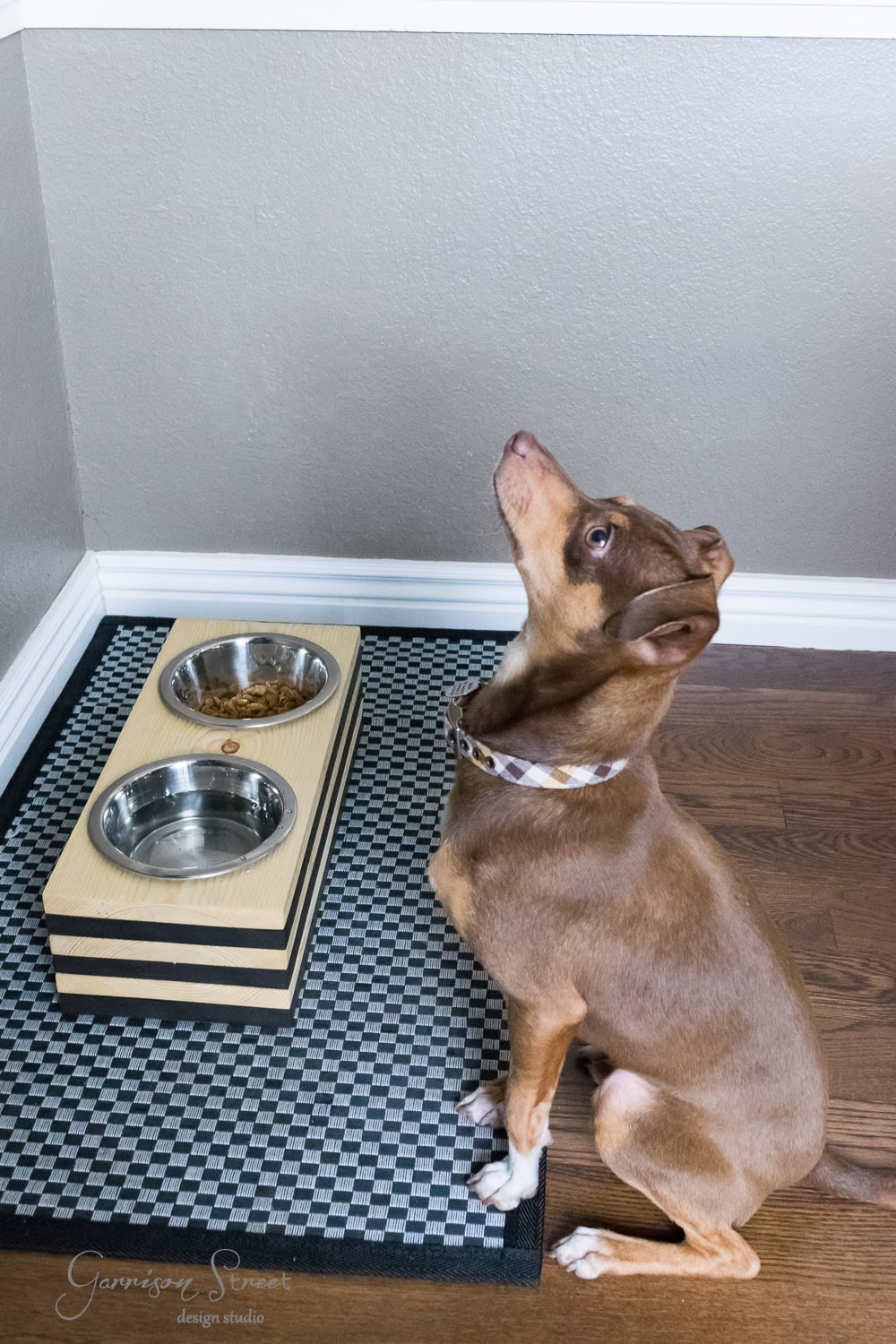
He also has a placemat because he can be a messy eater. Boy dogs, haha!
The end result is a simple raised dog bowl with a sleek modern look and it makes eating a bit easier for our pup Marvin. Since I used items we already had on hand, I only spent $4 on the new dog bowls for inside the stand. I am calling this project a win for mommy and Marvin.
If you enjoyed my DIY Raised Dog Bowls project, please share it on Facebook or hover over an image and save to Pinterest! And if you don’t already follow me on Instagram, Pinterest, or Facebook, I would love for us to be friends! You can also follow Marvin and all of his pup cuteness!
Be sure to subscribe to receive access to all my free printables, which are exclusively available to my AWESOME subscribers as my way of thanking you for your continued support!
This post, DIY Modern Raised Dog Bowls for Food and Water, appeared first on Garrison Street Design Studio.
